After physical therapy · Colorado Springs

Physical therapy ended. You don't feel finished.

Discharge means you've met the goals on the chart. It rarely means you're back to the life you had. This is the training that picks up from there.

18 yrs experience · Kinesiology degree · ACSM exercise physiologist · Fully insured

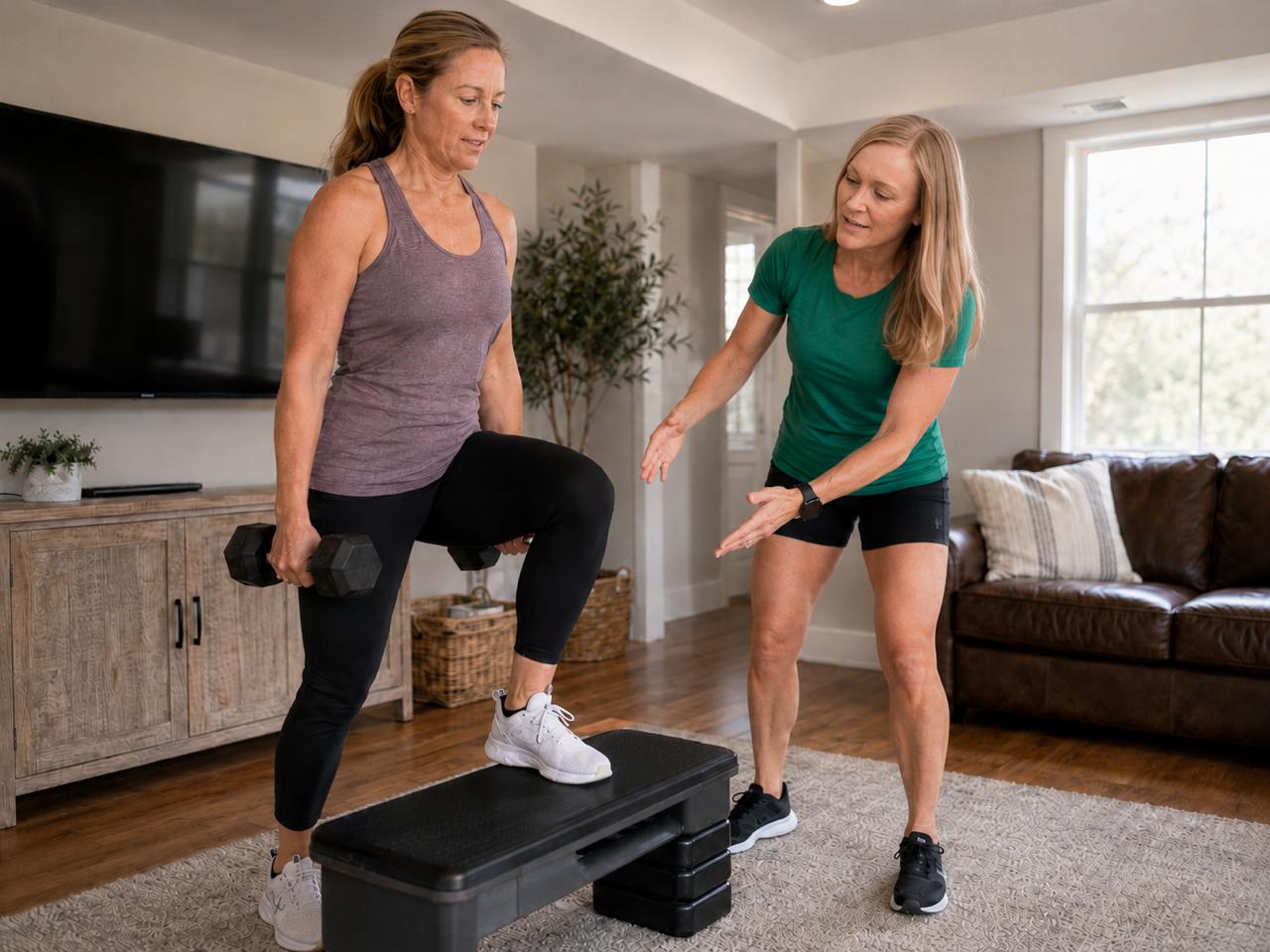
Jenelle coaching a client through guided strength work after physical therapy
18 years experience Kinesiology degree ACSM exercise physiologist NASM nutrition coach Fully insured

The gap nobody warns you about

Discharged is not the same as recovered

Physical therapy is built to get a specific problem out of crisis — the knee bends, the shoulder lifts, the pain is manageable, the visits run out. That is a real and valuable finish line. It is just a long way short of carrying a suitcase upstairs without thinking about it.

What usually happens next

People go home with a sheet of exercises and the best intentions. Within a month or two the sheet is in a drawer, the leg that was rebuilt starts quietly losing ground again, and the limp comes back under fatigue.

  • The home program gets boring and then abandoned
  • Nothing ever gets heavier, so nothing keeps improving
  • The good side stays strong; the repaired side stays behind
  • Confidence lags months behind the tissue

What training after discharge does

It treats the end of physical therapy as the start of rebuilding, not the end of care — with someone in the room who keeps the load climbing at a sane rate and notices when you're compensating.

  • Progressive strength, so the repaired side catches up
  • Balance and reaction work, not just range of motion
  • Someone watching your form every single session
  • Accountability — the reason it keeps happening at all

To be clear about what this is. Jenelle is a personal trainer and an ACSM certified exercise physiologist — not a physical therapist. This is not physical therapy, not medical treatment, and not a replacement for either. It is strength and conditioning for people who have finished a course of therapy, or who are still in one and have their therapist's blessing to train alongside it. If you're in pain or still under active treatment, the right first call is your physical therapist or physician — and Jenelle will happily work to whatever limits they set.

Common starting points

Who this tends to be for

After a joint replacement

Knee or hip. The new joint works; the leg around it has spent months being protected and is weaker than it looks. Rebuilding that is a strength problem, and it takes longer than insurance covers.

After a back or shoulder episode

The pain settled and you've been cautious ever since — lifting less, twisting less, doing less. The way out is graded, supervised loading, not permanent carefulness.

After a fall or a long illness

Weeks off your feet cost a surprising amount of muscle, and balance goes with it. This is the most reversible thing on this page, and the one most often left to sort itself out.

How it works

Starting is deliberately low-stakes

1

Free intro session

Bring your discharge notes, your surgeon's restrictions, the exercise sheet — whatever you have. Mostly it's a conversation about what you can't do yet that you want back.

2

A plan inside your limits

Built around the restrictions you actually have, in your home or a private studio. If your therapist has said "no loaded flexion for six weeks," that's the plan's boundary, not a suggestion.

3

Load that keeps climbing

The part a photocopied sheet can't do. Each session asks slightly more than the last, adjusted on the day for how the joint actually feels.

Good to know

Common questions

Will my insurance pay for this?

No — personal training isn't a covered medical service, and this is private-pay. Worth knowing honestly up front: it is also usually less per session than what people are surprised to find they owe after their therapy visits run out.

Can I start while I'm still in physical therapy?

Often yes, with your therapist's agreement. Say you're thinking about it and ask what they'd want avoided. Most are glad someone is going to keep the work going after they discharge you.

Do you talk to my physical therapist or doctor?

Gladly, if you want that and give the go-ahead. A short note listing restrictions is usually all it takes.

What if something hurts during a session?

You say so and the session changes — that's the advantage of one-on-one over a class or a handout. Anything that looks like a genuine setback gets sent back to your clinician rather than trained through.

Where do sessions happen?

Your home or a private garage studio in Colorado Springs, whichever is easier. No gym, no membership, no audience.

How long until I feel like myself?

Honestly, it depends on what you're coming back from — but strength changes show up in weeks, not months, and the confidence tends to follow a little behind it.

What does it cost?

Rates are listed plainly on the pricing section of the main page. No memberships, no contracts, no package you have to buy up front.
Book your free intro session

Bring your discharge paperwork and your questions. No pressure, no commitment, nothing to sign.

Text or call (719) 694-5173

or email trainwithjenelle@gmail.com